AI voiceover has gone from a novelty to a genuine production tool in the space of two years. The quality gap between AI voice and human narration has closed to the point where most listeners can't tell the difference in typical content formats — podcasts, YouTube videos, courses, explainer videos.
If you're creating content without a voiceover, you're leaving production quality and audience engagement on the table. And if you're paying for human voiceover work, you may be spending more than you need to. Here's how the major tools compare.
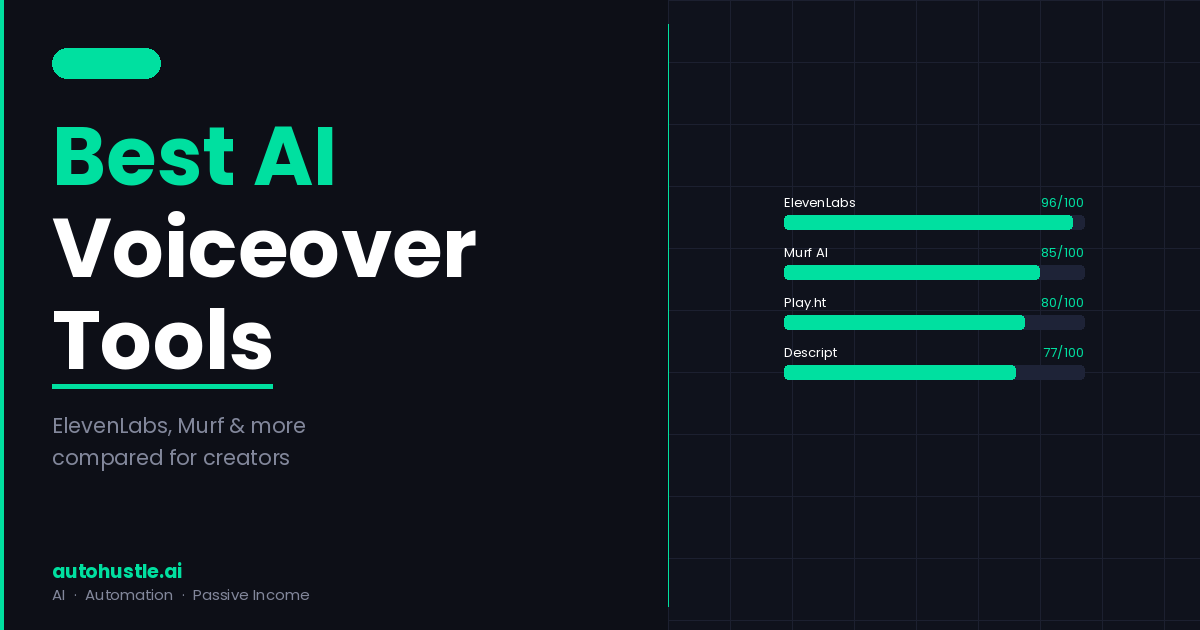
ElevenLabs — The Industry Standard
ElevenLabs is the tool most professional creators and developers reach for first, and it's earned that position. The voice quality is exceptional across their library of pre-built voices, the voice cloning (creating a model from your own voice samples) is the most natural-sounding available, and the controls over delivery — pace, emotion, emphasis — are genuinely useful.
What makes it stand out:
- Voice cloning quality is the best in class — 30 seconds of audio produces a usable clone; 2+ minutes produces something indistinguishable from the original
- Multilingual support across 29 languages with natural-sounding output
- Developer API for building voiceover into automated workflows
- Projects feature for long-form audio production (audiobooks, courses) with consistent voice throughout
Limitations: The free tier is limited to 10,000 characters per month — enough for testing but not production use. Paid plans start at $5/month for 30,000 characters, with higher tiers for heavier production use.
Best for: Anyone who needs the highest quality output or wants to clone their own voice. The default choice for most professional use cases.
Murf AI — Best for Course Creators
Murf has carved out a strong position specifically with online course creators and presentation makers. Its interface is built around creating multi-voice projects with script editing, timing controls, and direct integration with tools like Google Slides and Canva. The voice library is large (120+ voices across 20 languages) and the platform is designed for non-technical users who want to produce professional narration without a learning curve.
What makes it stand out:
- Clean studio interface purpose-built for course and presentation narration
- Emphasis and pause controls make delivery sound natural even on technical content
- Team collaboration features for content teams
- Direct slide sync for presentations
Limitations: The voice quality is slightly below ElevenLabs for naturalness. Voice cloning is available but not as refined. Pricing starts at $29/month for production use.
Best for: Course creators, presentation narrators, and anyone who wants a production-ready studio interface rather than a developer-first tool.
Descript Overdub — Best for Podcast and Video Editors
Descript is primarily a podcast and video editing tool, and Overdub is its built-in voice cloning feature. The key advantage: it's integrated into your editing workflow. If you record your own voice and want to fix mistakes, re-record lines, or add new sentences without going back to the mic, Overdub does it seamlessly — in your own cloned voice, within the same project.
What makes it stand out:
- Edit your audio by editing the transcript — delete words, the audio deletes. Add sentences, Overdub generates them in your voice.
- Studio Sound feature cleans up background noise and improves audio quality automatically
- Built into a full podcast/video editing suite — no context switching
Limitations: Not designed for creating standalone voiceover content. Requires recording yourself first to train the voice model. Starts at $24/month.
Best for: Podcasters and video creators who record themselves and want seamless voice correction and augmentation without separate voiceover software.
Play.ht — Best for High-Volume and API Use
Play.ht is strong for long-form content production at volume — particularly audiobooks, long podcast-style content, and automated content pipelines. It has a large voice library (900+ voices), competitive API pricing, and solid multilingual support. The interface is less polished than Murf or ElevenLabs, but the API access and pricing make it attractive for high-volume use cases.
Best for: Developers building AI-powered content tools, publishers producing audiobooks at scale, or anyone running high-volume automated voiceover generation. From $31.20/month for production use.
The Recommendation
For most solopreneurs: start with ElevenLabs. Their free tier lets you test the quality properly, their paid tiers are reasonably priced, and the voice quality is the benchmark everything else is measured against.
If you're primarily a course creator who wants a polished studio workflow, add Murf. If you edit your own podcast or video content, Descript is the tool that will change your production process most dramatically.
Pick one. Use it for 30 days. The quality of your content will improve noticeably — and the time you spend recording and re-recording will drop to nearly zero.