Everyone Is Talking About AI Agents. Here's What They Actually Mean for You.
If you've been in any AI or creator space lately, you've heard the phrase "AI agents" more times than you can count. Venture capitalists are pouring billions into them. Tech journalists are calling them the future of work. And most solopreneurs are nodding along while quietly wondering: what even is an AI agent, and does it matter to me?
It matters enormously. Here's the plain-English breakdown.
What Is an AI Agent, Exactly?
An AI agent is an AI that doesn't just respond to a single prompt — it takes a sequence of actions to complete a goal. Think of the difference between asking someone "write me an email" and saying "find my three most important unanswered emails, draft professional replies, and schedule them to send at 9am tomorrow". The second task requires multiple steps, decisions, and tool usage. That's what an agent does.
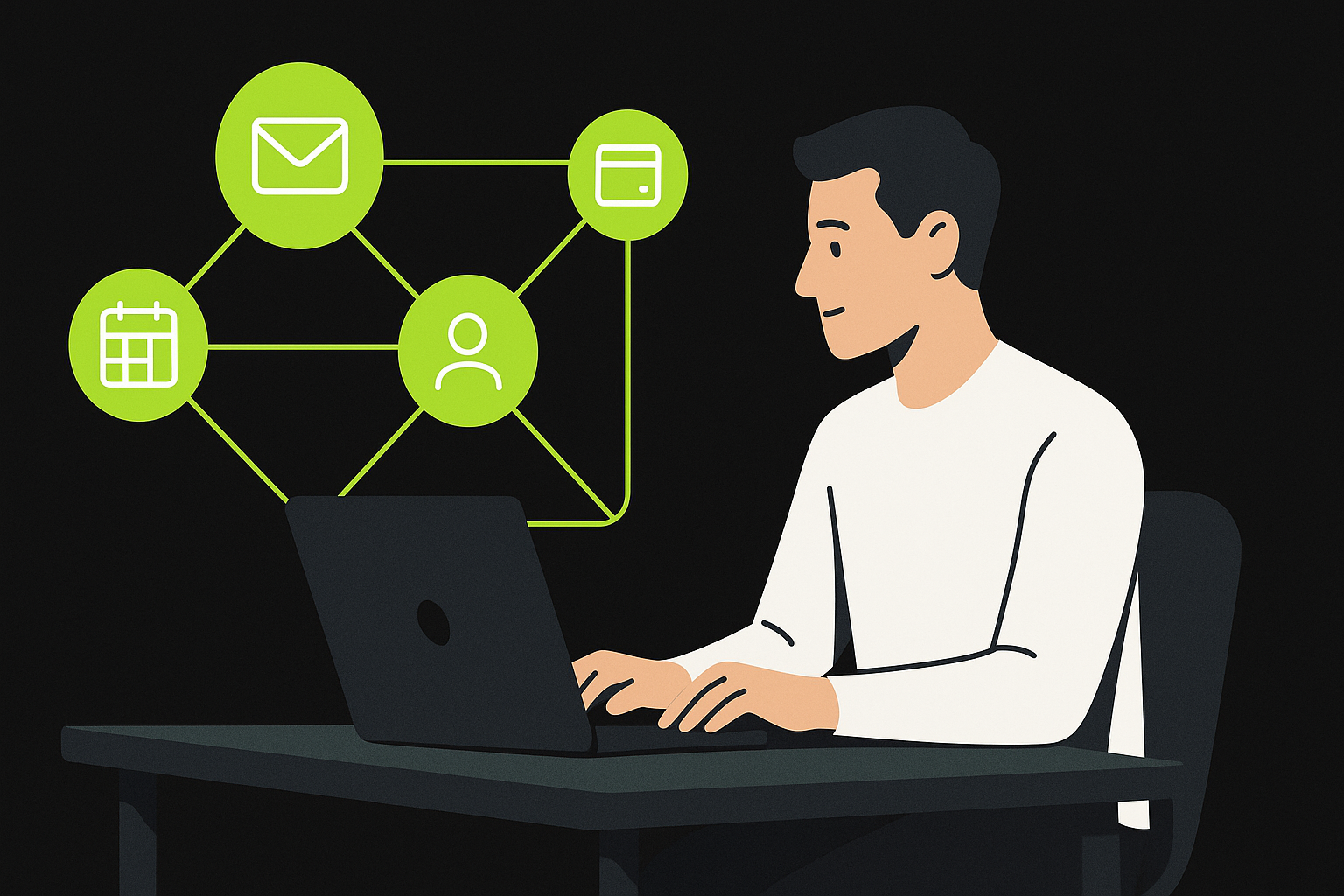
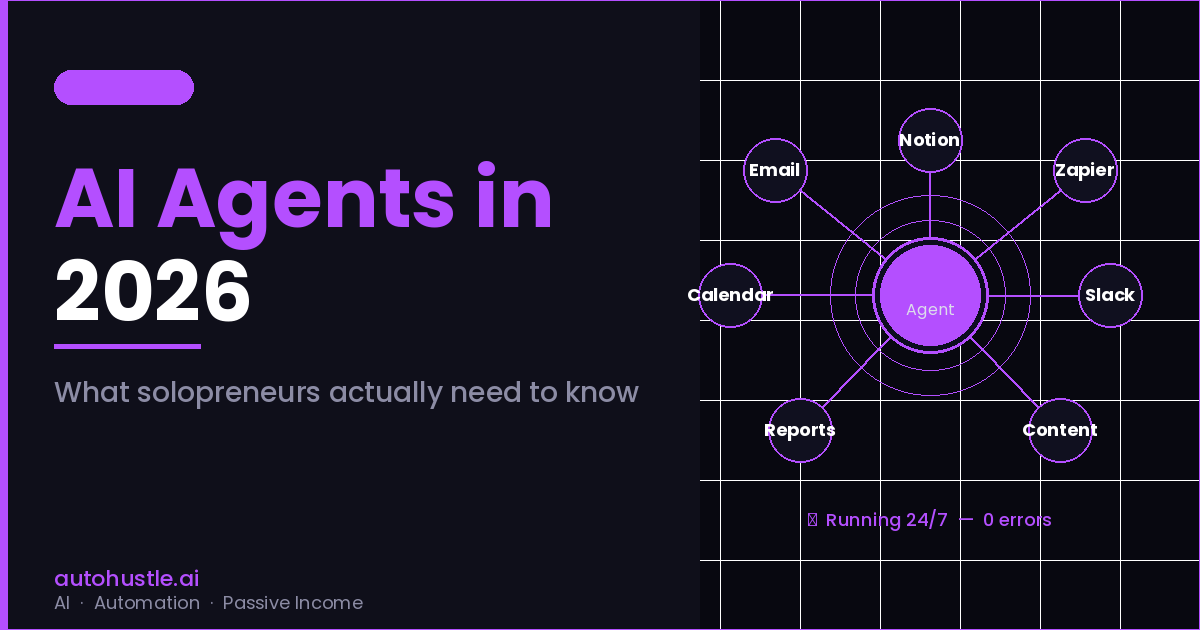
Agents can browse the web, send emails, update spreadsheets, post on social media, create files, read documents, and interact with software — all on your behalf, autonomously, while you sleep.
Why 2026 Is the Year Solopreneurs Should Care
Until recently, building AI agents required Python knowledge, API integrations, and significant technical setup. That's changed dramatically. Tools like Zapier AI, Make, n8n, Relevance AI, and even Claude's own Projects and computer use features have made agent-building accessible to non-technical users.
The solopreneurs who figure this out now are compressing what used to take a team into a single-person operation. We're talking about running email marketing, customer support, content publishing, bookkeeping follow-ups, and lead nurturing — all with minimal human input.
The Three Types of AI Agents You Should Know About
1. Task Agents do a specific job on repeat. A content agent that publishes a new blog post every week. A lead agent that emails new signups within 5 minutes. A reporting agent that sends you a weekly performance summary every Monday. These are the easiest to build and the best place to start.
2. Research Agents gather, synthesise, and summarise information from across the web. For solopreneurs, this means an agent that monitors competitor pricing, tracks industry news, or compiles weekly trend reports in your niche — saving hours of manual research every week.
3. Decision Agents are more advanced — they evaluate options and make recommendations. Think of an agent that reviews your analytics weekly and suggests which content to double down on, or one that triages your inbox and flags only the emails that require your personal response.
How to Build Your First Agent (No Code Required)
The easiest entry point is Zapier AI or Make (formerly Integromat). Here's a simple example: building an agent that monitors your Gmail for new client enquiries, summarises each one using AI, and adds them to a Notion CRM automatically.
- Trigger: New email received in Gmail matching "enquiry" or "quote request"
- Action: Send email content to Claude or ChatGPT via API with a prompt to extract the client name, service requested, and urgency
- Action: Create a new entry in your Notion CRM with the extracted fields pre-filled
- Action: Send yourself a Slack or SMS notification with the summary
That's a functional AI agent, built in under an hour, that handles a task most solopreneurs spend 30–60 minutes a day on manually.
The Platforms Leading the Charge in 2026
- Relevance AI — drag-and-drop agent builder with pre-built templates for sales, marketing, and support workflows
- n8n — open-source and self-hostable, best for privacy-conscious or cost-sensitive users
- Zapier AI — best for beginners, integrates with 6,000+ apps, minimal setup
- Claude Computer Use — Anthropic's capability that lets Claude actually operate your computer applications, not just chat
- AutoGen / CrewAI — for the technically inclined who want multi-agent systems where multiple AI models collaborate on complex tasks
What to Automate First
Don't try to automate everything at once. Start with the task you repeat most often that requires the least creative judgment. The top candidates for solopreneurs:
- Responding to FAQs and standard enquiries
- Scheduling social media content
- Sending weekly newsletter drafts to your inbox for review
- Compiling weekly analytics into a summary
- Following up with leads who haven't responded in 48 hours
Pick one. Build it this week. The confidence you'll gain from watching it run autonomously will make the next one feel trivial.
The Bottom Line
AI agents are not science fiction and they're not just for big companies. In 2026, the competitive advantage belongs to solopreneurs who treat AI as infrastructure — not just a writing assistant. The tools are here, they're accessible, and the early movers are already pulling ahead.
Your job is to stop observing the trend and start building inside it.